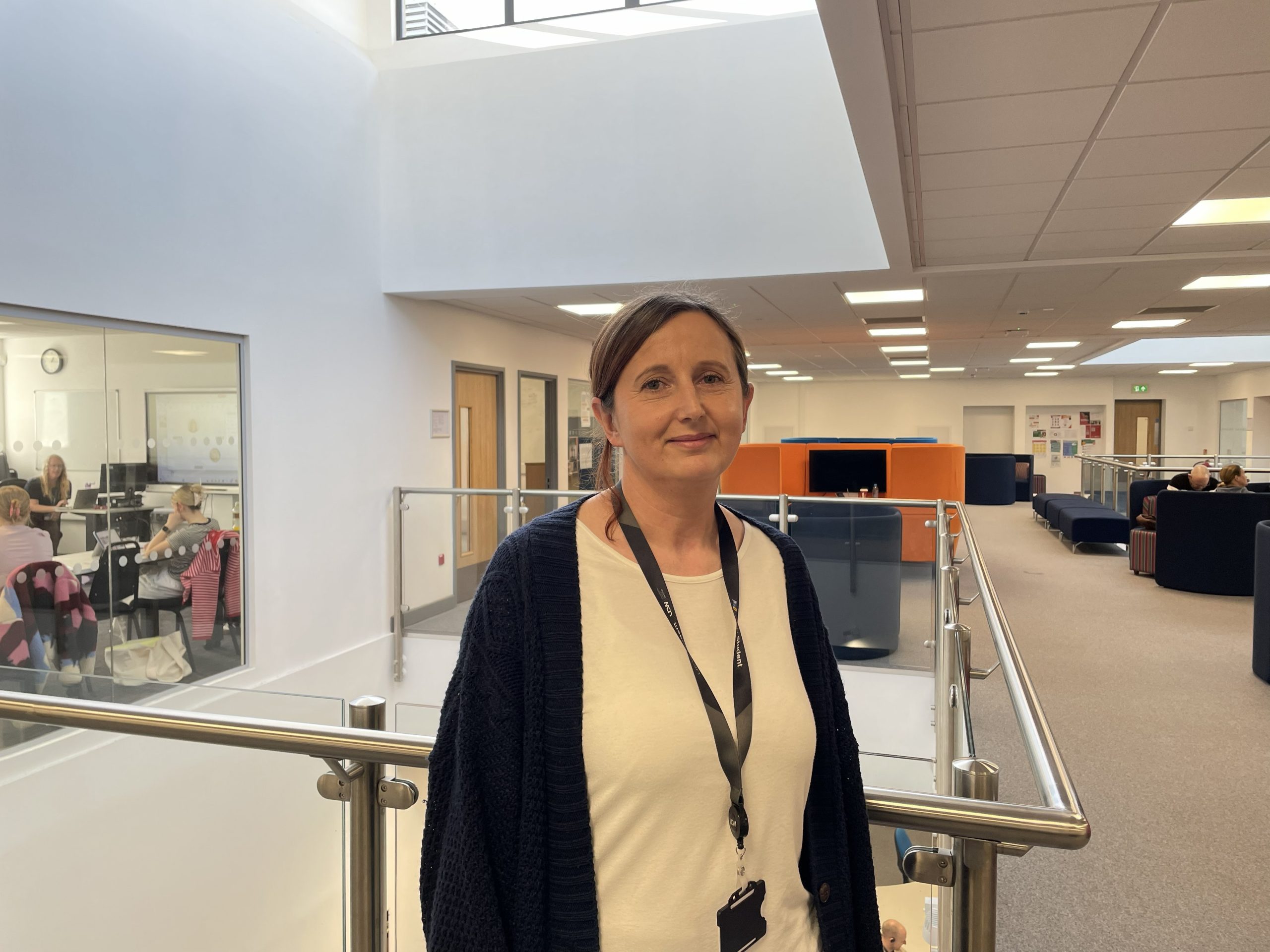
Interested in studying one of our Education and Early Years courses? We caught up with student Anna, currently studying BA (Hons) Early Years Education, for a Q&A about her time at UCW.
What inspired you to choose an Early Years and Education degree?
I had been contemplating a career change. I had previously worked with adults with learning disabilities. I started by enrolling onto a level 2 and subsequently onto a level 3 early years educator course at Weston College. Close to finishing my level 3 course my tutor asked me if I would consider doing a degree in early years but at first I wasn’t convinced that I could do it. One of my colleagues from college however signed up for the Early Years Education degree and she loved it. This prompted me to explore my options.
I went to the UCW open day and met some of the course leaders who were very supportive and encouraging. The course sounded interesting, so I decided to take a plunge, applied and got offered a place. Studying and working requires commitment and discipline and on some days I am very tired but I don’t regret doing it. I have learned so much and had grown both personally and professionally. I would recommend UCW if you are thinking of studying early years education, 100%.
How have you found the course so far, and has it met your expectations?
I didn’t really know what to expect when I enrolled on my degree course, but I’ve loved every minute of it! Our tutors are very knowledgeable with many years of experience in early years which is very helpful. They are always happy to help and offer guidance should you become confused. All the modules have been very informative. My favourite so far were ‘Play, Learning and Pedagogy’ and ‘Exploration, Creativity and Curriculum’. What I really like about this course that it builds on your previous experience – it’s like joining the dots together where theory meets practice and things start making sense. I look forward to continuing to apply what I have learned in practice.
What have been the most interesting or valuable things you’ve learned?
Learning about how different countries support young children’s learning and development particularly the ‘Nordic approach to education’ which is based on principles of child led experiences and values education. It resonates with my own pedagogy that children learn best through following their own interests by being offered opportunities to play in nature and being free to explore and experiment.
Values education focuses on exposing children to moral, social and cultural values from an early age to enable them to develop empathy, affinity for their culture but also responsibility for their actions. I think that it is important for children’s voices to be heard and the role of early years practitioners should be supporting this.
Have any particular theories or approaches to early childhood education stood out to you?
I work at Keepers Gate Forest School and am a firm believer in nature pedagogy and its benefits to children’s learning and wellbeing. I believe, similarly to Froebel who was the creator of the first kindergarten, that young children should be allowed to play before they are exposed to more formal education. Play supports children’s holistic development but it’s often misunderstood or undervalued.
Greg Bottrill, one of our guest lecturers at university, believes that play is what ignites children. I could not agree more! Children learn more when they are interested, are fascinated by something and our role as adults and educators should be to support them in this exploration. I think that in the UK we start ‘educating children’ far too early and that they should be allowed to be children first, to develop their confidence, social and collaboration skills and their core body strength before we start focusing on a correct pencil grip and sitting still in the classroom.
What has your placement experience been like, and what have you learned from working directly with children?
During the duration of my degree I have been based in two different settings. Both had been great in supporting me with my confidence and professional development although both were quite different. My first placement was at a small, local preschool where I took my very first steps in early years. It was a positive experience. I loved spending time with children and learning all about their interests, fascinations and development. I think that it is very important to gain practical experience alongside the academic input and being able to apply what you have learned to practice. And the other way around, while observing children being able to link it to a developmental theory. A real revelation for me was to learn about how important play is in children’s lives following on from theorists such as Froebel, Montessori or more contemporary influences including Greg Bottrill and Ben Kingston-Hughes. I had the pleasure of meeting them both when they came to do guest lectures at UCW and found those encounters inspiring.
Another important thing that I have learned from children is how to have fun! You will never experience boredom or a dull moment while in company of young children. They are creative, spontaneous and full of joy. I feel privileged to be able to share those precious experiences with children in my care.
What challenges have you faced during the course, and how have you overcome them?
I guess, doing a degree course when you are slightly older and having a child and family makes things a little harder. You need to spend time focusing on your course work, but your family still needs you. For me the biggest challenge was to make sure I don’t miss out on spending time with my 10 year old daughter whilst at the same time staying on top of my assignments. I guess all parents or carers of young children could relate.
From an academic perspective I definitely felt challenged by the variety of assessments we engaged with. I had to learn how to write in an academic style, to create portfolios, prepare presentations and even create a scrapbook! I am not very artistic and never thought of myself as an academic, but (thus far) I have completed all my assignments. I do feel stretched at times but with the support from our tutors and the academic development team those obstacles can be overcome!
What key skills do you feel you’ve developed since starting the degree?
I believe I have gained more confidence in myself. We have been exposed to different modules and learning methods. I particularly enjoyed the more creative ones, such as creating digital presentations on a chosen topic. My digital skills were limited but the sessions with the academic development team really helped with this. I feel more confident using my IT skills than I was before.
I learned about academic writing and can write a decent essay. As a non-native English speaker this is particularly satisfying. I definitely feel that my language skills have grown which as a professional is very important.
How supportive have the staff been at UCW?
What I really like about UCW is that because of the small seize of our cohort we get to know the tutors and support staff very well. This makes the whole university experience much easier and more manageable in comparison to bigger education providers. The staff are there if you need help and there is always someone to talk to. If you find yourself struggling with academic skills the academic support team are always on hand.
What are your next steps after completing the degree?
Initially, I am going to take some time off from studying and focus more on my family and rebalancing my life a bit. I will continue working with my current employer because they have been amazing throughout my time at the university and I do love my job. I am hoping that an opportunity will come up where I will be able to utilise what I have learned and maybe do some additional, more job specific qualification such as outdoors play therapy.
What advice would you give to someone considering studying Early Years and Education?
If you enjoy spending time with children and want to see them thrive and achieve, give it a go! This course will support you to gain a better understanding of child development, explore different theories underpinning how we view children and childhood today, learn about different approaches to early education and how to become a creative and reflective practitioner. It does not matter if you are 18 or 50, if you enjoy working in early years and want to see children thrive – come and join us!
A big thank you to Anna for joining us for this Q&A! There’s still time to apply for our BA Early Years Education course and our BA Education Society and Childhood course! Click the links to find out more and apply now! Explore all of our Education and Early Years courses here!